


 LANGUAGE / English

In the world of reef keeping, water changes are something almost every hobbyist is familiar with.
At a glance, the process seems simple. Remove a portion of old water and replace it with freshly mixed saltwater. However, despite its simplicity, water changes are often underestimated in their importance.
Even with today’s advanced equipment and filtration technologies, regular water changes remain one of the core practices for maintaining long-term stability and balance in a reef system.
As reefers begin to understand the role water changes play in long-term stability, a natural question follows.
It is no longer just about whether water changes are being performed, but how they should be performed to truly benefit the system.
Many hobbyists reach a point where, despite doing regular water changes, their tank still feels inconsistent. Some days it looks great, while other times something feels slightly off.
Over time, a pattern becomes clear.
The long-term performance of a reef tank is not defined by how well a single water change is done, but by whether the process can be carried out consistently and steadily over time.
This is why many experienced reefers gradually move toward a more stable approach.
→ Smaller, more frequent, and consistently scheduled water changes.
1.Managing Long-Term Nutrient Accumulation
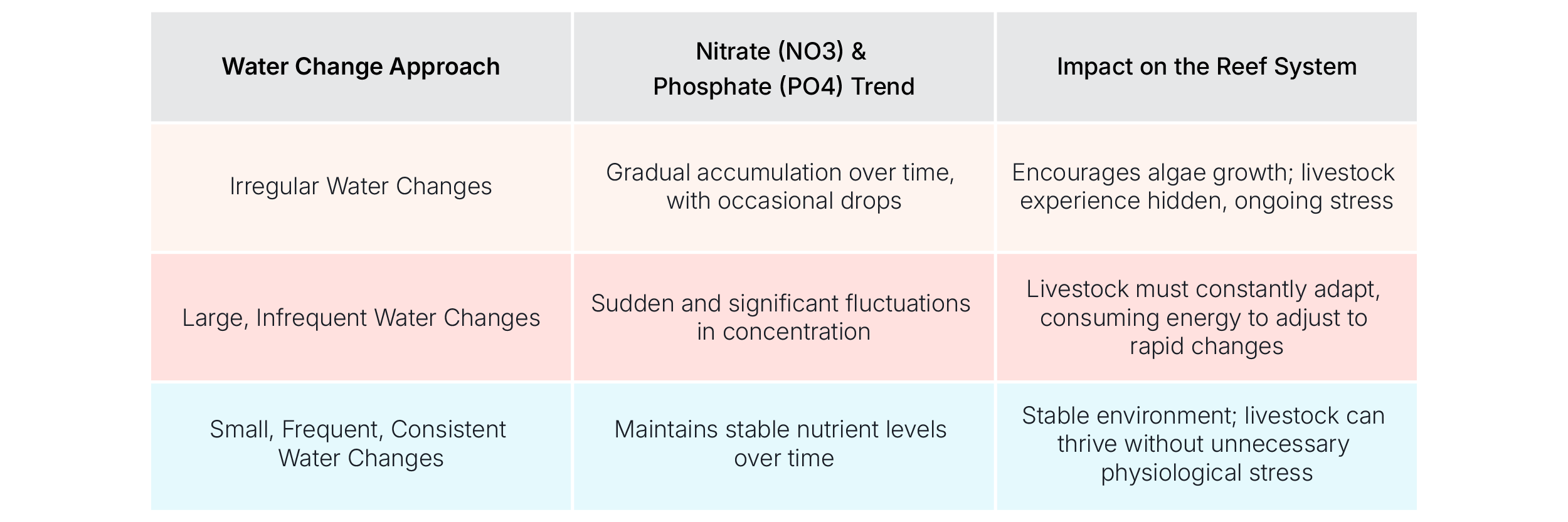
One of the most immediate benefits of water changes is the reduction of accumulated nutrients such as nitrates (NO3) and phosphates (PO4).
While small amounts of phosphate can be beneficial to coral health, elevated levels over time can contribute to algae growth, instability, and increased stress on corals, especially when other system factors remain unchanged.
Small, frequent water changes help maintain these compounds within a more stable and manageable range. Rather than dramatically improving water quality in a single moment, this approach works by preventing nutrients from accumulating to problematic levels in the first place.
The goal is not to create a sudden improvement, but to avoid long-term imbalance.
2. Reducing Parameter Instability
Many reefers have experienced the same situation. After a large water change, the water appears crystal clear, yet fish and corals may show signs of stress such as rapid breathing or mucus production.
In most cases, this is not caused by poor water quality, but by rapid changes in temperature, salinity, pH, and elemental balance occurring within a short period of time.
In contrast, smaller and more frequent water changes allow the system to adjust more gradually.
This approach helps: - Minimize sudden parameter fluctuations - Reduce repeated stress on livestock - Maintain a more stable and balanced system over time
3. Making Water Quality More Predictable
As a reef tank matures, stability alone is no longer enough. What many reefers begin to value is predictability.
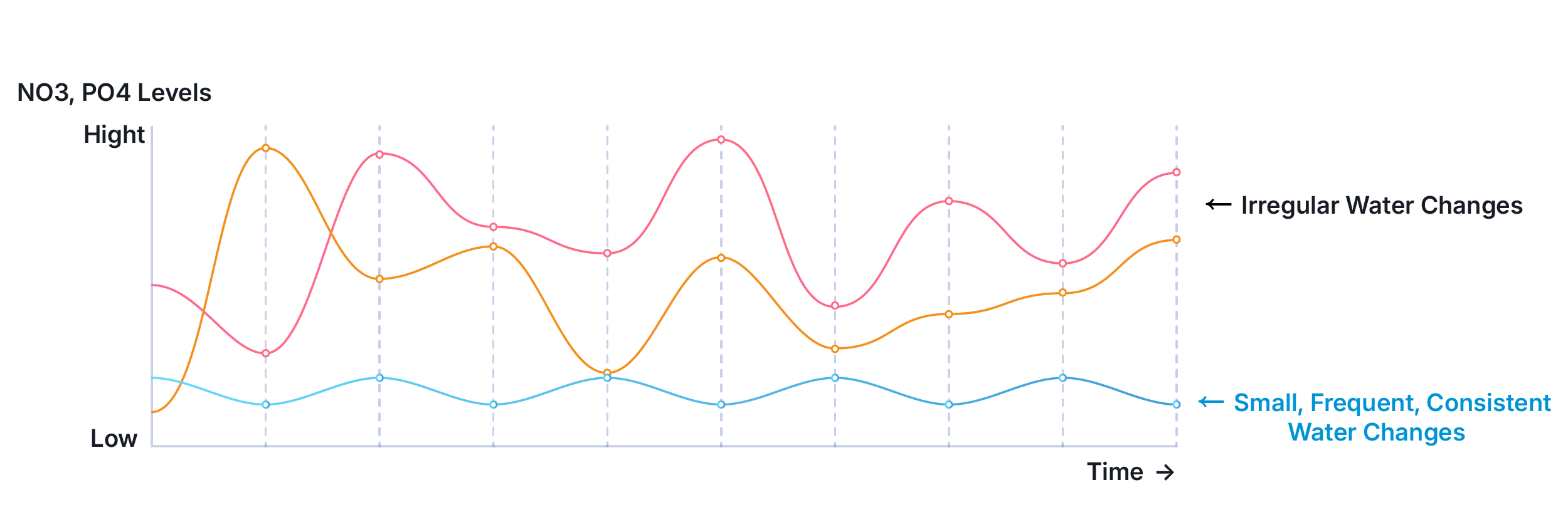
When water changes are performed at irregular intervals or in inconsistent volumes, water parameters are more likely to fluctuate. Even if the system appears stable, it may still be experiencing subtle instability beneath the surface.
By maintaining a consistent schedule, water parameters become easier to anticipate and manage. Reefers gain a clearer understanding of how their system behaves and can make more informed decisions.
For long-term success, this level of control is often more valuable than achieving ideal numbers in the short term.
4. Supporting Continuous System Balance
A reef tank is a constantly evolving ecosystem. Nutrients and organic matter are introduced daily, and without proper export, they will continue to accumulate.
Regular water changes help maintain balance by continuously refreshing the water and preventing the buildup of organic waste.
This creates a system that remains stable over time, rather than one that alternates between periods of low and high accumulation due to irregular maintenance.
5. Naturally Replenishing Trace Elements
In addition to removing unwanted substances, water changes also play an important role in replenishing elements that are gradually consumed by corals and other organisms.
Without relying heavily on dosing, regular water changes provide a relatively stable and lower-risk method of maintaining essential trace elements.
For many reefers, this simplifies overall system management while still supporting healthy coral growth.
6. The Real Challenge Is Consistency
Many reefers understand the benefits of small, frequent water changes. The real challenge lies in maintaining that routine over time.
Busy schedules, travel, and simple fatigue can easily disrupt even the best intentions. Once the rhythm is broken, water quality can begin to fluctuate again.
True stability does not come from occasional effort. It comes from consistent execution. The question then becomes — can this level of consistency actually be maintained over time?
When water changes become part of a stable routine rather than an extra task, long-term stability becomes achievable.
Small, frequent, and consistent water changes are not a short-term technique. They represent an approach that has been validated through years of real-world reef keeping.
This method helps maintain stable water conditions, aligns more closely with natural environmental processes, and supports the long-term health of both fish and corals.
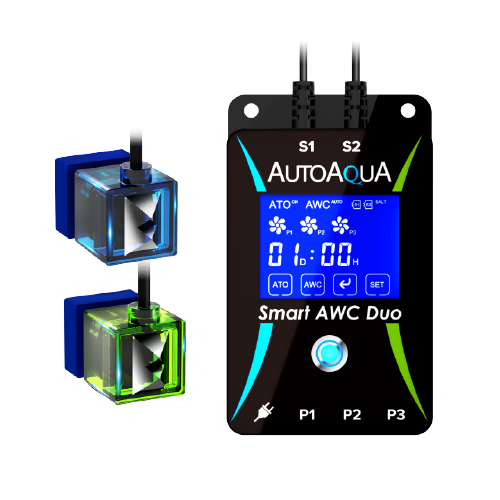
The role of AUTOAQUA Smart AWC is simple.
It helps integrate small, frequent, and consistent water changes into your system in a reliable and repeatable way.
With automated scheduling and precise control, water changes can be performed consistently without being interrupted by busy schedules or daily distractions.
This is not about replacing your experience. It is about ensuring that important, repetitive tasks are carried out with consistency and accuracy.
If your goal is to build a reef system based on long-term stability, this is exactly the kind of approach it is designed to support.
In the next article, we will explore how automated water change systems work, and how AUTOAQUA achieves stable and continuous water exchange in real-world applications.
→ How to Maintain Stability Without the Effort


