



 LANGUAGE / English

Water changes are one of the most essential aspects of reef tank maintenance. They help remove accumulated nutrients such as nitrates and phosphates, reduce organic waste, and maintain long-term stability. However, the effectiveness of water changes depends not only on how much water is changed, but also on how consistently and gradually the process is performed.
Water changes aren’t just routine. They are one of the fundamental pillars that support long-term reef stability.
The impact of water changes goes far deeper than most reefers expect. It’s not just about keeping your water clear, but about maintaining the conditions that allow your reef to remain stable over time.
For many hobbyists, water changes are simply part of the routine. Mixing saltwater, removing old water, and refilling the tank becomes second nature, and over time, each reefer develops their own approach. Because of this, it’s easy to assume that as long as water changes are being performed, the tank will remain in good condition.
But after some time in the hobby, many reefers begin to notice something important: → It’s not just whether you do water changes. → It’s how you do them that truly impacts your reef.
1. What Matters Is Not What You See, But What Accumulates
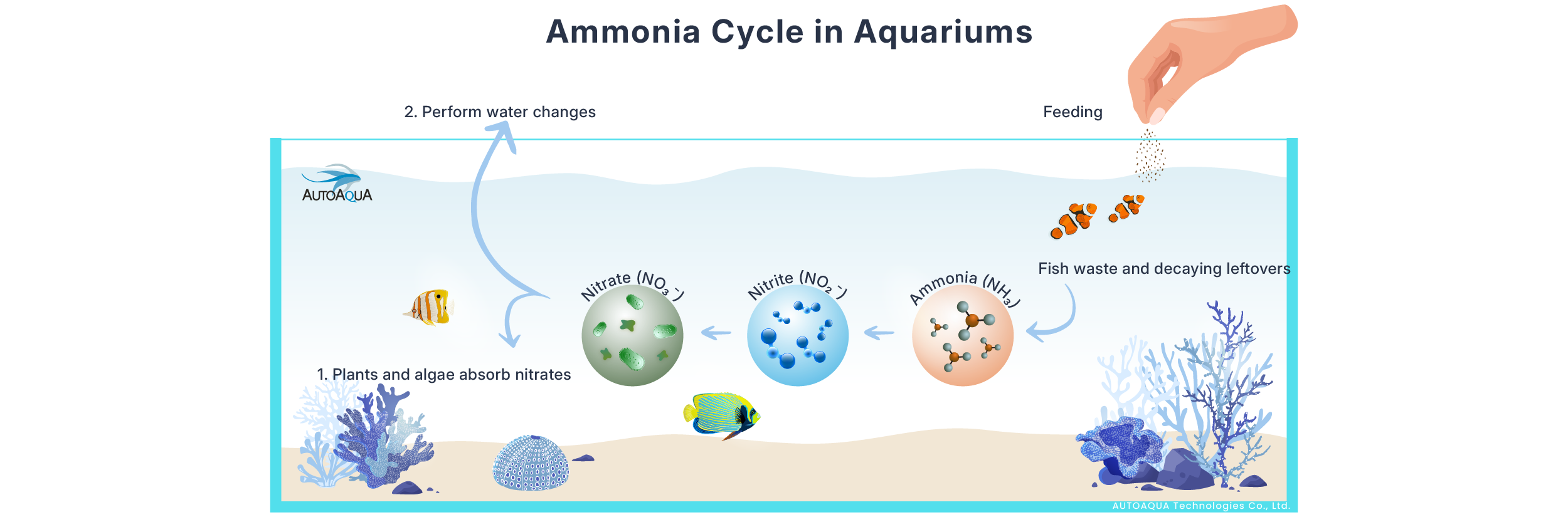
A reef tank is a dynamic, living system in which biological processes constantly produce byproducts such as nitrates (NO₃), phosphates (PO₄), dissolved organic compounds, and trace contaminants including heavy metals.
These substances do not typically cause immediate problems. Instead, they accumulate gradually, and their effects become noticeable only over time. Many reefers have experienced this progression: - Algae becoming more persistent - Coral coloration darkening or losing vibrancy - Growth slowing down or even stopping
These changes are rarely sudden. They are the result of long-term accumulation within the system.
Water changes function as a process of dilution and export, helping to bring accumulated nutrients, organics, and contaminants back toward natural seawater levels. Even highly efficient filtration systems, including protein skimmers, chemical filtration media, and refugiums, cannot completely remove everything. Certain compounds continue to build up in ways that filtration alone cannot fully address. For this reason, water changes remain one of the most direct and reliable methods for removing these substances from the system.
2. Supporting the Natural Balance of the System
At its core, a reef tank operates as a small ecosystem. Nutrients are continuously introduced through feeding, biological activity, and supplementation, and for the system to remain balanced, there must be a consistent mechanism for exporting what accumulates.
If export is insufficient, waste compounds gradually build up and begin to affect overall water quality. Regular water changes play a critical role in maintaining this balance by : - Preventing unlimited accumulation of waste - Continuously refreshing the water body - Keeping conditions more stable and consistent
This process closely reflects natural ocean environments, where water is constantly being renewed. A stable reef system is not static, but rather one that maintains balance through continuous, subtle change.
3. Are Large Water Changes the Ideal Approach?
It is common to assume that changing a larger volume of water at once is more effective. However, from the perspective of the tank, what matters is not the total volume changed, but how quickly the environment shifts.
During a large water change, multiple parameters such as temperature, salinity, pH, and overall elemental balance can change simultaneously. Even when using high-quality salt mixes, slight variations between batches can introduce additional inconsistencies.
These changes require fish and corals to adapt within a short period of time, which can result in stress responses even when the new water is well prepared. For this reason, stability is less about how much water is changed and more about how gradual the change is.
As a result, many experienced reefers begin to move away from large, infrequent water changes and instead adopt smaller, more frequent ones. This approach helps: - Allow livestock to adapt more gradually to changes - Reduce stress caused by sudden parameter swings - Maintain more stable and consistent water parameters over time
The goal is not to increase the total volume of water changed, but to improve how those changes are introduced into the system.
4. Consistency Makes Water Quality Predictable
Water changes are not defined by volume alone, but by consistency. When the timing, proportion, and frequency of water changes vary from one instance to another, water parameters are more likely to fluctuate.
Even if the system appears stable on the surface, it may be experiencing subtle but ongoing instability. In contrast, when water changes are performed in a consistent and predictable manner, system behavior becomes easier to understand and manage. Water parameters stabilize over time, and maintaining long-term health becomes significantly more achievable.
For reefers aiming to sustain a healthy system, predictability is not a secondary benefit. It is a key component of stability.
As reef keepers gain experience, their perspective on water changes often evolves. The focus gradually shifts away from simply completing the task and toward understanding how to perform it more effectively.
Questions begin to change. Instead of asking whether a water change has been done, reefers begin to consider how to make the process more stable, how to reduce stress on the system, and how to maintain consistency over the long term.
This shift represents an important transition. It marks the point where routine maintenance becomes a more intentional and refined approach to reef keeping.
In the next article, we will explore why an increasing number of reefers are adopting smaller, more frequent, and more consistent water change strategies, and how this approach contributes to long-term system stability.
→ Why Small, Frequent Water Changes Create Better Stability


